Calcium buildup on pool tile is one of those problems that starts small and compounds fast. That faint white line along your waterline today becomes a thick, crusty layer six months from now if nothing is done about it.
The removal method depends on what type of calcium deposit you’re dealing with. Calcium carbonate scrubs off with mild acid and a stiff brush. Calcium silicate, the harder variety that forms over months of neglect, resists most consumer products and often requires mechanical removal or professional intervention.
This guide covers both, along with specific approaches for fiberglass pools, vinyl liners, and pool walls where calcium tends to settle differently than on standard tile. If you’re in the Orlando area, a trusted pool resurfacing contractor in Orlando, FL can evaluate whether your calcium problem is a surface cleaning issue or something that runs deeper into the pool finish itself.
Calcium Carbonate vs. Calcium Silicate: Why It Matters
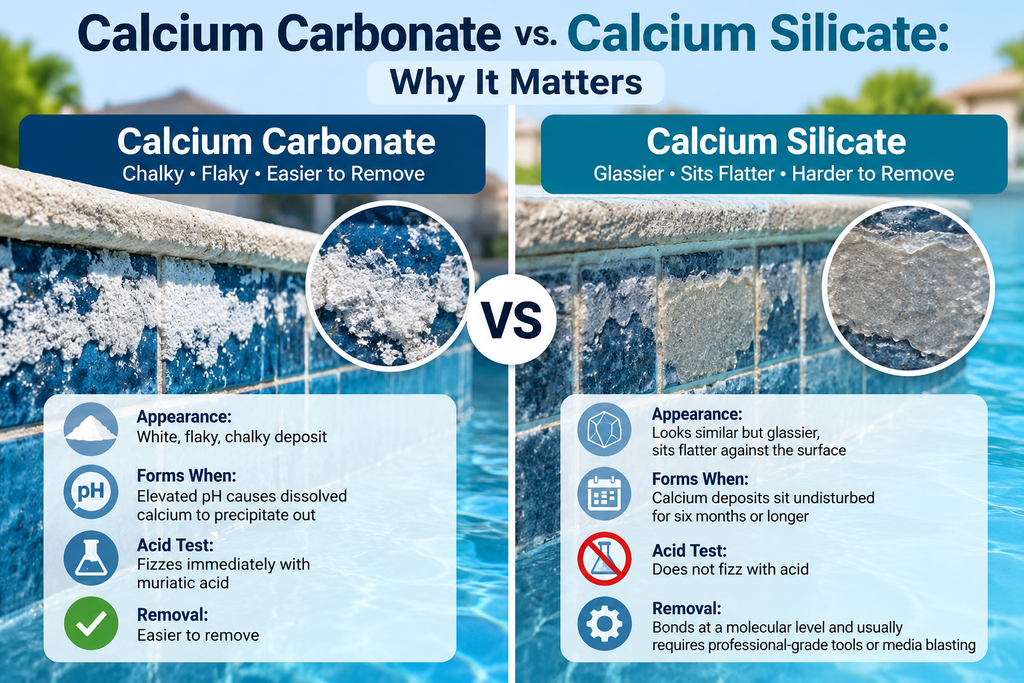
Not all calcium buildup is the same, and treating one type with the wrong method wastes time and money.
Calcium carbonate is the white, flaky deposit that forms when pool water with elevated pH allows dissolved calcium to precipitate out and land on tile, walls, and fixtures. It shows up as a chalky residue that flakes under a fingernail or reacts immediately when you dab it with a drop of muriatic acid. If it fizzes on contact, it’s carbonate, and it’s the easier of the two to remove.
Calcium silicate looks similar at first glance but feels glassier and sits flatter against the surface. It forms when calcium deposits sit undisturbed for extended periods, typically six months or longer. Silicate does not fizz when exposed to acid. It bonds to tile at a molecular level, and removing it without damaging the underlying surface usually requires professional-grade tools or media blasting.
Knowing which one you’re dealing with before you start scrubbing saves you from wasting a weekend on a method that was never going to work.
How to Remove Calcium Buildup From Pool Tile: Step-by-Step
Start with the least aggressive method and escalate only if the deposit doesn’t respond. Jumping straight to harsh chemicals or abrasive tools on a deposit that would have come off with vinegar creates unnecessary risk of tile damage.
Lower the Water Level
Drop the water 4 to 6 inches below the affected tile band. Calcium deposits along the waterline need to be dry or nearly dry for any cleaner to maintain contact long enough to dissolve the scale. Spraying cleaner onto wet, submerged tile dilutes it immediately and accomplishes nothing.
Try a Nylon Brush and Tile Cleaner First
Apply a commercial calcium scale remover or a product containing phosphoric acid directly to the dry tile. Let it sit for 3 to 5 minutes without drying out; reapply if it starts evaporating in direct sun. Scrub with a stiff nylon-bristle brush in tight circular motions.
This handles most calcium carbonate deposits that have been building for a few weeks to a few months. Fresh deposits come off surprisingly easily when you give the product adequate contact time.
Move to Pumice for Stubborn Spots
A pumice stone works on calcium carbonate that resists chemical cleaners alone. Keep both the stone and the tile surface wet at all times to prevent scratching. Use light, even pressure and let the pumice do the work rather than grinding into the tile.
Pumice is safe on standard unglazed ceramic and plaster surfaces. It is not safe on glazed tile, glass mosaic, or polished stone ,it will leave visible scratches that catch light and collect future deposits even faster.
Escalate to Muriatic Acid for Heavy Scale
For thick calcium carbonate that has layered over multiple seasons, a diluted muriatic acid solution (1 part acid to 10 parts water, always adding acid to water) applied with a brush breaks through deposits that milder products cannot touch.
Wear chemical-resistant gloves, safety goggles, and work in a ventilated area. Apply to small sections at a time, scrub, and rinse thoroughly before moving to the next area. Do not let acid sit on grout longer than necessary; prolonged exposure degrades grout and can loosen tile.
After completing the acid treatment, rebalance your pool water chemistry immediately. Muriatic acid drops pH and total alkalinity significantly, and leaving those levels uncorrected invites the same calcium precipitation cycle that created the buildup in the first place.
Call a Professional for Calcium Silicate
If the deposits don’t fizz with acid and resist every method above, you’re dealing with calcium silicate. At this stage, professional bead blasting or soda blasting is typically the only effective approach.
A trained operator adjusts media type and air pressure based on your specific tile material, removing the silicate layer without chipping glaze or cracking tile. Attempting this with rented equipment and no experience frequently results in damaged tile that costs more to repair than the professional cleaning would have cost.
How to Remove Calcium Buildup on Swimming Pool Tile at the Waterline
The waterline catches the worst of it because that’s where evaporation concentrates minerals daily. Every time the water level drops slightly, from evaporation, splash-out, or backwash, it leaves behind a thin mineral film on the tile. Those films stack on top of each other week after week.
For waterline-specific cleaning, apply your chosen product to the entire exposed tile band at once rather than working in small patches. This creates uniform results and prevents visible lines between cleaned and uncleaned sections.
A razor blade held flat at a 45-degree angle removes thick waterline scale from smooth, glazed ceramic tile without scratching. This is a finishing tool for the last stubborn patches after chemical treatment has done most of the work. Keep the blade angle shallow , steep angles gouge the glaze.
Waterline tile that has been neglected for years sometimes reveals damaged or deteriorating tile underneath the calcium layer. The scale was essentially holding compromised tile together. When cleaning exposes cracked, debonded, or pitted tile, that’s a sign the surface needs more than cleaning ,a pool resurfacing assessment may be the smarter next step before reinstalling new tile over a failing substrate.
How to Remove Calcium Buildup on Fiberglass Pool
Fiberglass pools present a different challenge because the gel coat surface is softer than ceramic tile and scratches far more easily. Aggressive scrubbing or harsh abrasives that work fine on tile can permanently dull or damage a fiberglass finish.
Use only non-abrasive calcium removers specifically labeled as fiberglass-safe. Products containing phosphoric acid at low concentrations are generally safe. Muriatic acid should be avoided entirely on fiberglass , even diluted, it can etch and cloud the gel coat.
Apply the cleaner with a soft cloth or non-scratch sponge rather than a stiff brush. Work in gentle, overlapping strokes and rinse each section completely before the product dries. Dried chemical residue on fiberglass creates its own staining problem.
For persistent calcium rings on fiberglass, a melamine foam pad (commonly sold as a magic eraser) provides enough mild abrasion to lift deposits without damaging the gel coat. Use it wet, with light pressure, and only on the affected areas.
Do not use pumice stones on fiberglass under any circumstances. A single pass with a pumice stone on gel coat leaves permanent scratch marks visible from across the pool.
How to Remove Calcium Buildup on Pool Walls
Calcium deposits on pool walls below the waterline form more gradually than waterline scale but cover larger surface areas. They typically appear as a hazy white film or rough, sandpaper-like texture on plaster, pebble, or exposed aggregate finishes.
For plaster pool walls, drain the pool to the level of the deposits or work underwater with a submersible-safe scale remover. Acid washing is the traditional approach for full-wall calcium removal on plaster, a diluted muriatic acid solution applied to wetted plaster, scrubbed, and rinsed in sections. Each acid wash removes a thin layer of plaster along with the scale, so this is not a process that can be repeated indefinitely. Most plaster surfaces tolerate two to three acid washes over their lifespan before the finish becomes too thin and requires resurfacing.
Pebble and exposed aggregate finishes hold calcium differently because of their textured surface. Scale settles into the gaps and recesses between aggregate, making flat scrubbing ineffective. A stiff nylon brush worked into the texture, combined with a calcium-specific chemical treatment, clears most buildup from aggregate finishes without the aggressive acid wash that plaster requires.
How to Remove Calcium Buildup on Vinyl Pool Liner
Vinyl liners are the most delicate pool surface when it comes to calcium removal. The material is flexible, thin, and easily damaged by abrasives, sharp tools, and concentrated chemicals.
Never use pumice stones, razor blades, or stiff brushes on vinyl. Never apply undiluted muriatic acid. Any of these will damage the liner, scratching, thinning, or creating weak spots that eventually tear.
For calcium deposits on vinyl liners:
- Apply a vinyl-safe calcium remover with a soft cloth or sponge
- Use white vinegar (undiluted) as a gentle alternative for light scale , spray it on, let it sit for 10 to 15 minutes, and wipe clean
- For stubborn spots, a paste of baking soda and water applied after a vinegar treatment provides just enough mild abrasion to lift loosened deposits
- Rinse the treated area thoroughly to prevent chemical residue from degrading the liner material
Calcium buildup on vinyl liners is often a sign that water chemistry has been consistently off balance. Addressing the root cause, typically elevated pH, high calcium hardness, or high total alkalinity, matters more than the cleaning itself, because a liner that keeps scaling will eventually need replacement regardless of how often it’s cleaned.
Preventing Calcium Buildup From Coming Back
Removing calcium deposits without fixing the water chemistry that caused them is temporary at best. The scale returns within weeks if the underlying conditions stay the same.
Keep pH between 7.2 and 7.6. Calcium precipitates out of solution more aggressively as pH rises above 7.8. A pool running at 8.0 or higher will scale every surface it touches, regardless of how recently those surfaces were cleaned.
Maintain calcium hardness between 200 and 400 ppm. Water above 400 ppm is oversaturated and actively depositing calcium on every available surface. Water below 200 ppm becomes aggressive and pulls calcium from plaster, grout, and stone, which creates different problems but eventually contributes to scaling elsewhere in the system.
Add a sequestering agent on a maintenance schedule. Sequestrants keep dissolved minerals in suspension rather than allowing them to plate out on surfaces. A maintenance dose every two to four weeks, per the product label, meaningfully reduces scale formation between cleanings.
Brush the waterline weekly. Five minutes with a nylon brush once a week prevents the thin mineral film from hardening into the kind of bonded scale that requires chemicals and elbow grease to remove. This is the single highest-return habit for keeping pool tile clean.
Test fill water before adding it to the pool. Municipal water and well water vary widely in mineral content. If your source water tests above 400 ppm calcium hardness, a hose-end pre-filter removes a significant percentage of dissolved minerals before they enter the pool.
FAQs
Does vinegar remove calcium buildup from pool tile?
Yes, white vinegar dissolves light calcium carbonate deposits effectively. Apply it undiluted to dry tile, let it sit for 10 to 15 minutes, and scrub with a nylon brush. It won’t touch calcium silicate or heavy scale that has layered over multiple seasons, but for routine maintenance cleaning, it’s a safe and accessible option.
How often should I clean calcium off pool tile?
Brush the waterline weekly to prevent deposits from hardening. A chemical cleaning every 1 to 3 months keeps calcium from building to the point where aggressive removal methods become necessary. Pools with hard fill water or consistently high pH may need monthly attention.
Can I use a pressure washer to remove calcium from pool tile?
Pressure washing is not recommended for calcium removal on pool tile. High pressure can crack tile, destroy grout, and force water behind the tile surface, causing debonding. If attempted at all, use low pressure under 2,000 PSI with a wide fan tip held at least 12 inches from the surface, but chemical treatment and brushing produce better results with far less risk.
What is the fastest way to remove calcium buildup from pool tile?
For calcium carbonate, a phosphoric acid-based commercial descaler applied to dry tile with 3 to 5 minutes of contact time, followed by aggressive scrubbing with a nylon brush, clears most deposits in a single pass. For calcium silicate, professional bead blasting is the fastest and most effective option ,no consumer product matches it.
Is calcium buildup on pool tile harmful?
Calcium deposits themselves are not toxic, but they indicate water chemistry imbalances that can damage pool equipment, reduce sanitizer effectiveness, and shorten the lifespan of pool surfaces. Heavy scale can also harbor bacteria and algae beneath the deposit layer, creating sanitation concerns that aren’t visible until the scale is removed.
Can calcium deposits permanently damage pool tile?
Calcium silicate that sits for extended periods can etch into tile glaze and leave permanent marks even after removal. Ironically, aggressive removal methods used on the wrong tile type pumice on glass, acid on stone cause more permanent damage than the calcium itself. Matching the removal method to the tile material prevents damage during cleaning.
Why does calcium keep coming back after I clean it?
Recurring calcium buildup almost always points to a water chemistry issue, typically pH running above 7.8, calcium hardness above 400 ppm, or both. Cleaning removes the symptom. Correcting and maintaining proper water balance addresses the cause. Without rebalancing, fresh scale begins forming within days of cleaning.
Should I drain my pool to remove calcium buildup?
Full draining is rarely necessary for tile cleaning; lowering the water level 4 to 6 inches below the tile line exposes the waterline deposits. Full or partial draining becomes relevant for wall-scale removal on plaster pools that require acid washing, or when the calcium problem extends well below the waterline across large surface areas.