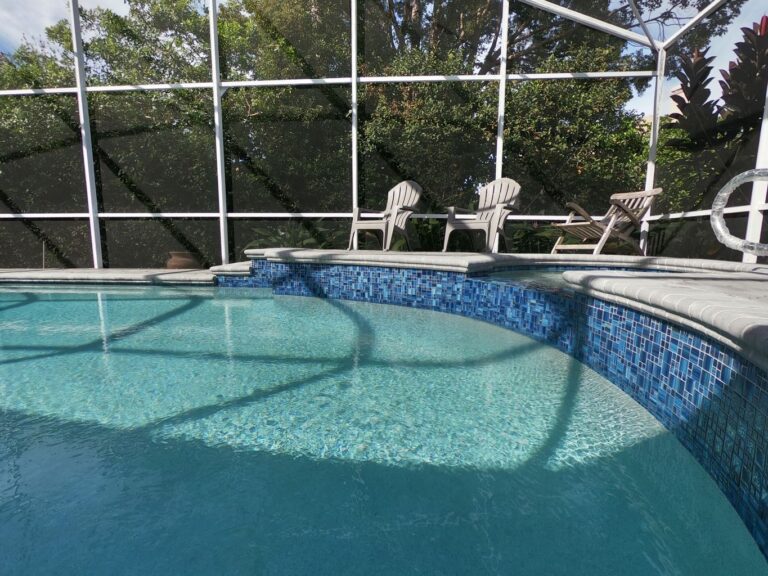
Pool decking is the surface that surrounds your swimming pool, giving you a safe, slip-resistant place to walk, lounge, and entertain. It is usually made from concrete, pavers, stone, wood, or composite.
This guide answers what is pool decking, how each material compares, what it costs, and how to choose the right one. Worn surfaces? Call a Pool Resurfacing Contractor.
What Is a Pool Deck Used For?
So, what is pool deck space for? It is the hardscape around your pool that people walk, sit, and play on. It keeps wet feet on a stable, textured surface, gives you room for loungers and tables, and helps water drain away from the pool. It also frames the pool and ties it to your yard.
In-ground pools usually get concrete or stone, while above-ground pools usually get wood or composite.
Cracked or worn surfaces create trip and slip risks, so central Florida owners can look into Pool Resurfacing in Winter Park, FL.
Pool Deck vs Patio
A patio is a general outdoor living area, while a pool deck is the dedicated surface around the pool. Pool decks need extra slip resistance, drainage, and chemical resistance.
Many homeowners connect the two with matching materials for a seamless look. Treat the pool deck like a safety feature first and a design feature second.
Common Pool Decking Materials
Most pool decking falls into five groups: concrete, pavers, natural stone, wood, and composite. Each balances cost, comfort, slip resistance, and upkeep differently.
Concrete and pavers get their own sections below, so here are the other options first. Prices vary by region, so treat every cost in this guide as a ballpark.
Natural Stone and Travertine
Natural stone, including travertine, flagstone, and coral stone, gives a high-end look. Travertine is popular because it tends to feel comfortable underfoot and pairs well with other materials.
The tradeoffs are cost and porosity. Travertine pavers can run roughly $18 to $30 per square foot installed, and flagstone often costs more.
Stone also needs a solid concrete base and periodic sealing to resist stains and pool chemicals. Choose a textured or honed finish so wet surfaces stay grippy.
Wood and Composite Decking
Wood offers classic charm at a lower upfront price, but it doesn’t always handle pool chemicals and moisture well. Plan to stain and seal it yearly, and expect a 10 to 20 year lifespan.
Composite decking costs more upfront, yet it resists rot, splinters, and fading and needs little more than soap and water.
Both can get hot in direct sun. They are most common around above-ground pools and raised decks, so choose deep texturing for slip resistance.
Tile and Brick
Tile looks polished and offers many colors, but it can be slippery when wet, so choose textured, pool-rated tile.
Brick adds a classic look, yet it isn’t the most durable choice in a constantly wet area and often costs $20 to $35 per square foot installed.
Both usually sit on a concrete base, which adds to the total price. They work best as accents rather than the main surface.
Concrete Pool Decks
Concrete pool decks are the most popular choice for in-ground pools, mainly because they are durable, versatile, and usually the most affordable. Concrete swimming pool decks can be poured in almost any shape and finished in many textures and colors.
The key is choosing the right finish, since smooth concrete gets slippery when wet.
Concrete Finishes
Broom finish is the standard. It is simple, low cost, and slip-resistant. Exposed aggregate shows small stones for natural texture and grip.
Stamped concrete imitates stone, brick, or wood with patterns and color. Cool deck coatings add a reflective layer that keeps the surface noticeably cooler in hot climates.
Whatever you choose, ask your contractor about a pool-rated mix, proper control joints, and an expansion joint where the deck meets the coping.
Concrete Pool Deck Cost
Concrete pool deck cost depends on finish, size, and site prep. Broom finish typically runs about $6 to $12 per square foot installed. Stamped concrete runs about $10 to $18, and cool deck coatings add roughly $4 to $7.
For a 600 square foot deck, expect about $3,600 to $10,800 overall.
Costs are higher in some regions, and prep work like grading or removing an old deck can add to the bill. Get at least three quotes.
Pros and Cons of Concrete
Concrete wins on price and durability, and it offers plenty of finish options.
- Pros: lower cost, long life, many textures and colors
- Cons: can crack as soil shifts, can run hot in sun, patch repairs rarely match
Stamped concrete also needs resealing every 2 to 3 years at roughly $0.50 to $1.50 per square foot. Control joints help manage cracking.
Hire a pro for the base, reinforcement, and slope, since a poor pour can cause early problems.
Pool Deck Pavers
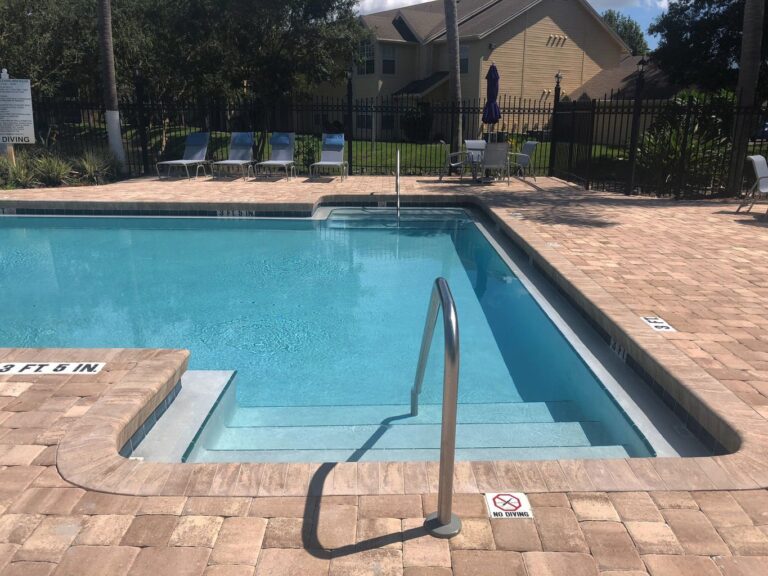
A pool deck paver is an interlocking unit made from concrete, brick, or natural stone and laid over a compacted base. Pavers give a classic look, come in many shapes and colors, and are easy to replace one piece at a time.
Pool deck pavers cost more than plain concrete, but many owners like the upgrade in style and comfort.
Paver Types and Cost
Concrete pavers are the most budget friendly option, typically about $12 to $20 per square foot installed. Brick pavers add a traditional look.
Natural stone pavers like travertine run about $18 to $30, and flagstone about $20 to $35. Concrete pavers cost less than stone, but stone offers a more luxurious look.
Labor and base prep make up a big part of the price, so quotes vary widely by region and site.
Pros and Cons of Pavers
Pavers feel comfortable underfoot, offer good grip, and can be lifted and replaced if one cracks or stains. The downsides are higher upfront cost and sensitivity to poor installation. If the base isn’t compacted properly, pavers can sink and leave an uneven surface.
- Pros: style, easy repairs, comfortable underfoot
- Cons: higher cost, can settle, joints need upkeep
Hire an experienced installer and ask about base depth and joint material. Sealing pavers can protect color and resist stains.
Pool Decking for Above-Ground Pools
Above-ground pools usually get a raised deck made of wood, composite, or PVC boards. Wood is the budget pick, with pressure-treated pine often costing about $15 to $20 per square foot installed.
Composite materials cost about $4 to $12 per square foot before labor but last longer with less upkeep.
Raised decks must meet local building and safety rules for railings, gates, and barriers, so check your permit requirements before you build.
How to Choose the Right Pool Decking
Match the material to your climate, budget, and pool type. Use this quick checklist:
- Slip resistance: choose textured surfaces rated for wet feet
- Heat: lighter colors and cool deck coatings stay cooler in strong sun
- Budget: concrete is usually cheapest, while stone and pavers cost more
- Maintenance: wood needs yearly sealing, composite needs very little
- Local rules: check permits, barrier codes, and setbacks
Test samples barefoot at midday before you commit. Ask a pro how each material pairs with your coping and pool finish.
Pool Deck Design Ideas
Mix materials to add interest: a concrete main deck with paver or stone borders, a travertine band near the coping, or composite steps.
Add built-in seating, planters, or a shaded lounge area to create zones. Use warm neutral colors that hide dirt and stay cooler.
Keep walkways wide enough for two people to pass safely. Matching the deck to your home’s exterior ties the whole yard together.
How to Maintain Pool Decking
Rinse the deck regularly to clear dirt, leaves, and chlorinated splash. Seal concrete and stone as recommended, often every 2 to 3 years for stamped concrete.
Stain and seal wood yearly, and clean composite with soap and water.
Fix cracks, loose pavers, and chips early, because small problems grow quickly. Most deck repairs fall in the $500 to $2,500 range, which is far less than replacement.
Keep drains clear, and make sure water slopes away from the pool and house.
FAQs
Here are quick answers to common pool decking questions.
What Is Pool Decking?
Pool decking is the surface around a swimming pool where people walk, lounge, and play. It is usually concrete, pavers, or stone for in-ground pools and wood or composite for above-ground pools.
A good deck is slip-resistant, comfortable underfoot, and slopes water away from the pool. Choosing the right material depends on budget, climate, and maintenance.
Many decks also include coping, the finished edge around the pool.
How Much Does a Concrete Pool Deck Cost?
Most concrete pool decks cost about $6 to $18 per square foot installed. Broom finish sits at the low end, around $6 to $12, while stamped concrete runs about $10 to $18.
A 600 square foot deck often lands between $3,600 and $10,800. Cool deck coatings add about $4 to $7 per square foot.
Prices rise with complex patterns, poor soil, or demolition of an old deck. Compare several written quotes.
Are Pavers or Concrete Better for a Pool Deck?
Concrete is cheaper and more durable, while pavers look more upscale and are easier to repair. Pool deck pavers typically cost $12 to $20 per square foot installed, versus $6 to $18 for concrete.
Pavers feel comfortable underfoot, but they can settle if the base is poor. Choose concrete for budget and speed, and pavers for style and easy repairs.
Both work well when installed on a properly compacted, sloped base.
What Is the Best Pool Decking Material for Hot Climates?
Look for light-colored, textured surfaces. Cool deck concrete coatings stay cooler than standard broom finish, and travertine and many pavers often feel more comfortable underfoot.
Dark composite and wood can get hot in direct sun. Test samples barefoot at midday if possible.
Cool deck coatings can run 15 to 25 degrees cooler in very hot climates. Shade structures and umbrellas also make the deck more usable.
How Long Does a Pool Deck Last?
Concrete and stone decks can last decades with sealing and repairs. Composite often comes with 25 year or longer warranties. Wood typically lasts 10 to 20 years and needs yearly sealing.
Pavers can last a lifetime with proper maintenance, though they may need re-leveling.
Lifespan depends heavily on installation quality, climate, and upkeep. Sealing and early crack repair add years to nearly any deck.