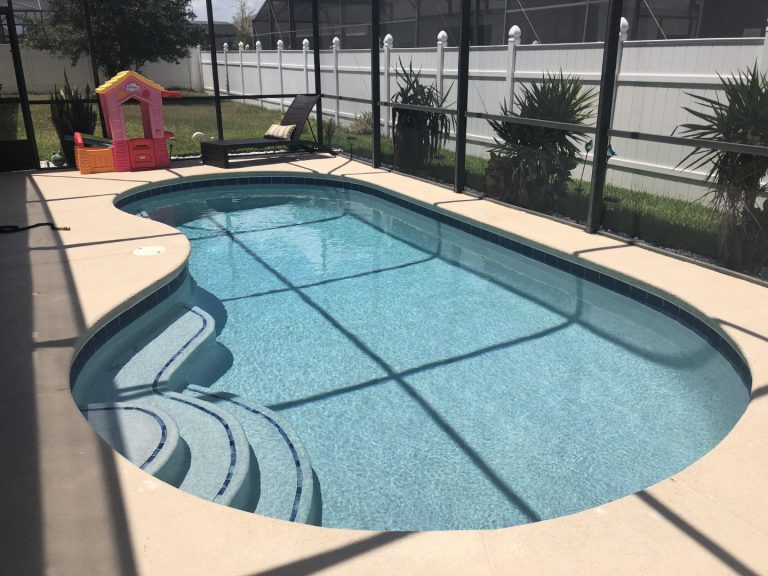
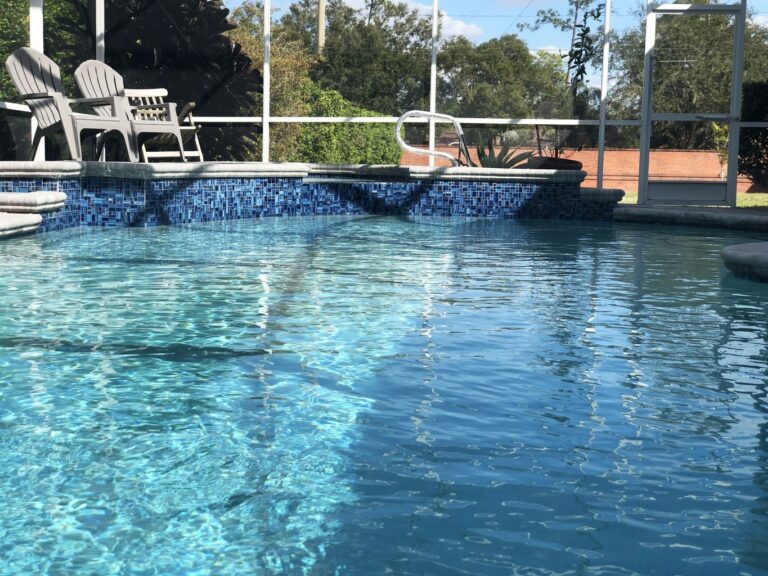
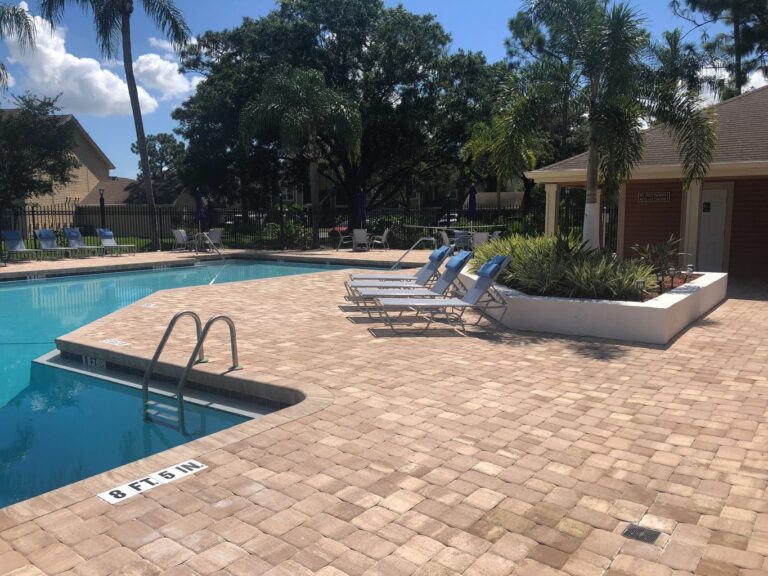
What is a plunge pool? It is a small, deep pool built for cooling off and soaking rather than swimming laps. Most are 4 to 8 feet deep and fit tight yards. They cost far less than a full-size pool and heat faster.
This guide covers dipping pools, above ground options, costs, and design. Need surface work? Call a Pool Resurfacing Contractor.
What Is a Plunge Pool?
A plunge pool is a compact pool designed for immersion, not exercise. Most measure between 7 by 7 feet and 13 by 21 feet, with about 7 by 13 feet a common middle size.
Depth runs from 4 to 8 feet, and many sit around 5½ to 7 feet, deep enough to submerge to your shoulders.
They are too small for laps, but great for cooling off, relaxing, and low-impact water exercise. Plunge pools can be inground, semi-inground, or above ground.
What Is a Dipping Pool?
So, what is a dipping pool? It is a small, shallow pool for wading, tanning, and cooling off. The terms are often used interchangeably, but a dipping pool is usually shallower and may be heated, while a plunge pool is deeper and often unheated.
A small dipping pool is not meant for diving or laps. A mini dipping pool can be as small as 6 feet across.
Cocktail pools are close cousins, built for lounging with seats and ledges.
Plunge Pool Types and Materials
Plunge pools come in concrete, fiberglass, and vinyl liner, plus prefab and stock tank options. Each differs in cost, install time, and upkeep. Pick the material before you pick the shape.
Concrete Plunge Pools
Concrete plunge pools are built on site, so you can customize the shape, depth, and finish. They often cost $40,000 to $70,000 or more, and they suit custom designs and tricky yards.
The interior finish wears over time and needs resurfacing, so Winter Park homeowners can see Pool Resurfacing in Winter Park, FL.
Expect plaster, quartz, or pebble options for the surface, which you can compare on our Choosing Your Finish page.
Fiberglass Plunge Pools
Fiberglass plunge pools arrive as a one-piece shell with molded steps and seats. Prefab inground models often run $20,000 to $40,000 installed, and the smooth surface resists algae.
Install is fast because the shell is made ahead of time. The tradeoff is fixed shapes and the need for crane and truck access.
Many models also work above ground or semi-inground.
Vinyl, Prefab, and Stock Tank Plunge Pools
Vinyl liner plunge pools cost less upfront, but the liner needs replacing every 8 to 12 years. Stock tank pools are the cheapest route, starting around $3,000, and they suit cold plunges and casual soaking.
Prefab kits and container-style pools offer faster installs.
Whatever you pick, make sure the pool and its fencing meet local safety and permit rules.
Plunge Pool Above Ground
A plunge pool above ground is the easiest and cheapest way in. Options include fiberglass or concrete shells, stock tanks, and semi-inground builds with the top 12 to 18 inches above grade.
Above ground plunge pools can cost about $3,000 to $30,000, and they often skip excavation and may not need a building permit. Always check local rules first.
They are easier to install, but you still need a level base, safe access, and proper barrier rules.
Plunge Pool for Small Backyard Spaces
A plunge pool for small backyard spaces fits where a full-size pool won’t. Typical inground pools start around 14 by 28 feet, while many plunge pools are about 7 by 13 feet.
Check setbacks from property lines, utilities, and trees before you pick a size.
Leave room for an excavator or crane, and plan a deck, shade, and seating around the water. Small backyard plunge pools work best when the layout stays simple.
Pavers or travertine around the pool make a small yard feel finished, and our Choosing Pavers guide compares options.
Plunge Pool Cost
Plunge pool cost depends on size, material, and whether the pool is above ground or inground. The national average is about $20,000, with a typical range of $10,000 to $50,000.
Costs below are ballparks, so confirm local pricing.
Typical Cost Range
Above ground plunge pools run about $3,000 to $30,000. Prefab fiberglass inground models often cost $20,000 to $40,000, and custom concrete runs $40,000 to $70,000 or more.
A small 6 foot pool may cost $10,000 to $15,000, while a 10 to 12 foot pool costs $20,000 to $30,000. Infinity edges can push totals to $25,000 to $50,000.
A plunge pool usually costs less than a full-size inground pool.
What Affects the Price
Several factors move the total:
- Material: concrete costs more than fiberglass or vinyl
- Shape: rectangles cost less than round or custom shapes
- Site access and excavation
- Permits, which often run $400 to $1,800
- Extras: lighting, heater, steps, and tile
LED lights run about $800 to $1,200 each, and tile adds roughly $4 to $32 per square foot. Tile can be your biggest finish upgrade, so see our Choosing Tiles guide.
Ongoing and Heating Costs
Plunge pools hold less water, so they use fewer chemicals, less electricity, and less cleaning time. Some estimates put upkeep at about $1,500 to $5,000 a year, versus $3,000 to $7,000 or more for a full-size pool.
Heating costs less too, since a small volume warms fast. Add a cover to hold heat and cut evaporation.
Budget for water, insurance, and a safety fence too.
Plunge Pool Pros and Cons
Plunge pools trade size for simplicity.
Pros:
- Lower cost than a full-size pool
- Less water, chemicals, and energy
- Fits small and oddly shaped yards
- Heats quickly
- Great for cooling off and low-impact exercise
Cons:
- Too small for laps
- Limited space for guests
- Heating still adds cost
- Extras can push the price up
If those cons are dealbreakers, a larger pool or swim spa may fit better.
Plunge Pool vs Dipping Pool vs Cocktail Pool
Here is how the small pool types compare.
| Type | Typical Depth | Best For |
| Plunge pool | 4 to 8 feet | Soaking and cooling off |
| Dipping pool | Shallower, often heated | Wading and lounging |
| Cocktail pool | 3 to 5 feet | Seating and socializing |
| Stock tank pool | Varies | Budget cold plunges |
Many companies use these names loosely, so ask for exact depth and size before you buy.
Heating and Water Temperature
Plunge pools can be heated, and a small volume warms quickly. A heat pump or gas heater handles most setups, and a cover keeps the heat in.
Most swimmers like water between 78°F and 82°F, and soaking pools are often kept warmer, which you can read more about in our guide to the ideal swimming pool temperature.
Cold plunge users may prefer much cooler water, so choose equipment to match your goal.
Plunge Pool Features and Design Ideas
Because the footprint is small, you can invest in details. Popular add-ons include built-in benches, steps, LED lighting, jets, a spillover or small water feature, and a heater.
Tile adds color at the waterline, and a salt chlorine system can simplify care.
Pair the pool with a paver or travertine deck, shade, and comfortable seating to create a full outdoor space. Keep the design simple so the pool does not crowd the yard.
How to Maintain a Plunge Pool
Small pools are easy to care for, but water chemistry can swing fast with less water. Test pH and sanitizer weekly, skim daily, and brush as needed.
Run the filter on schedule, and keep a cover on when the pool is not in use.
Every few years, check the finish, tile, and equipment, and resurface when the surface turns rough or blotchy. Follow local safety rules for fencing and barriers.
Is a Plunge Pool Right for You?
A plunge pool fits best when space or budget is tight. It is a poor fit for lap swimmers or big parties.
Good fit if:
- You have a small or narrow yard
- You want a place to cool off and relax
- You prefer lower upkeep and energy use
Skip it if:
- You want to swim laps
- You host large groups
- You need deep water for diving
Visit a finished plunge pool or ask your contractor for references before you commit.
FAQs
Here are quick answers to common plunge pool questions.
What Is a Plunge Pool?
A plunge pool is a small, deep pool designed for cooling off, soaking, and low-impact exercise instead of swimming laps. Most measure between 7 by 7 and 13 by 21 feet and are 4 to 8 feet deep.
They can be inground, semi-inground, or above ground, and they cost less to build and maintain than full-size pools.
What Is a Dipping Pool?
A dipping pool is a small, shallow pool for wading, tanning, and cooling off. It is usually shallower than a plunge pool and may be heated. Plunge pools are deeper and often unheated.
Neither is meant for diving or laps, though many companies use the names loosely, so confirm depth before buying. A mini dipping pool can be as small as 6 feet across.
Can You Have a Plunge Pool Above Ground?
Yes. You can choose a fiberglass or concrete plunge pool above ground, a semi-inground build with the top 12 to 18 inches above grade, or a stock tank.
Above ground plunge pools cost about $3,000 to $30,000 and are easier to install. Check local permit and barrier rules before you buy.
How Much Does a Plunge Pool Cost?
The national average is about $20,000, with a typical range of $10,000 to $50,000. Above ground options run $3,000 to $30,000, fiberglass inground models about $20,000 to $40,000, and custom concrete $40,000 to $70,000 or more.
Permits, lighting, heaters, and tile add to the total. Get itemized quotes from a few local contractors.
What Is the Best Plunge Pool for a Small Backyard?
For most small yards, a prefab fiberglass plunge pool is a strong choice because it installs fast and fits tight spaces.
Choose concrete if you want a custom shape or depth, or an above ground or semi-inground model to save on excavation. Measure your space, check setbacks, and plan for equipment access.